
Fast Read
Sizing a solar system for a business in Brisbane involves analysing your electricity bills to determine your average daily kilowatt-hour (kWh) consumption, especially during daylight hours. For optimal performance, Brisbane panels should face north at a 26-27 degree tilt. Indicative pricing for commercial systems starts from around $9,000 for a 10kW system, $25,000 for a 30kW, $40,000 for a 50kW, and $85,000 for a 100kW system, inclusive of the Small-scale Technology Certificate (STC) incentive. Choosing a Solar Accreditation Australia (SAA) accredited installer is essential for quality and to claim these government incentives.
How to size a commercial solar system in Brisbane
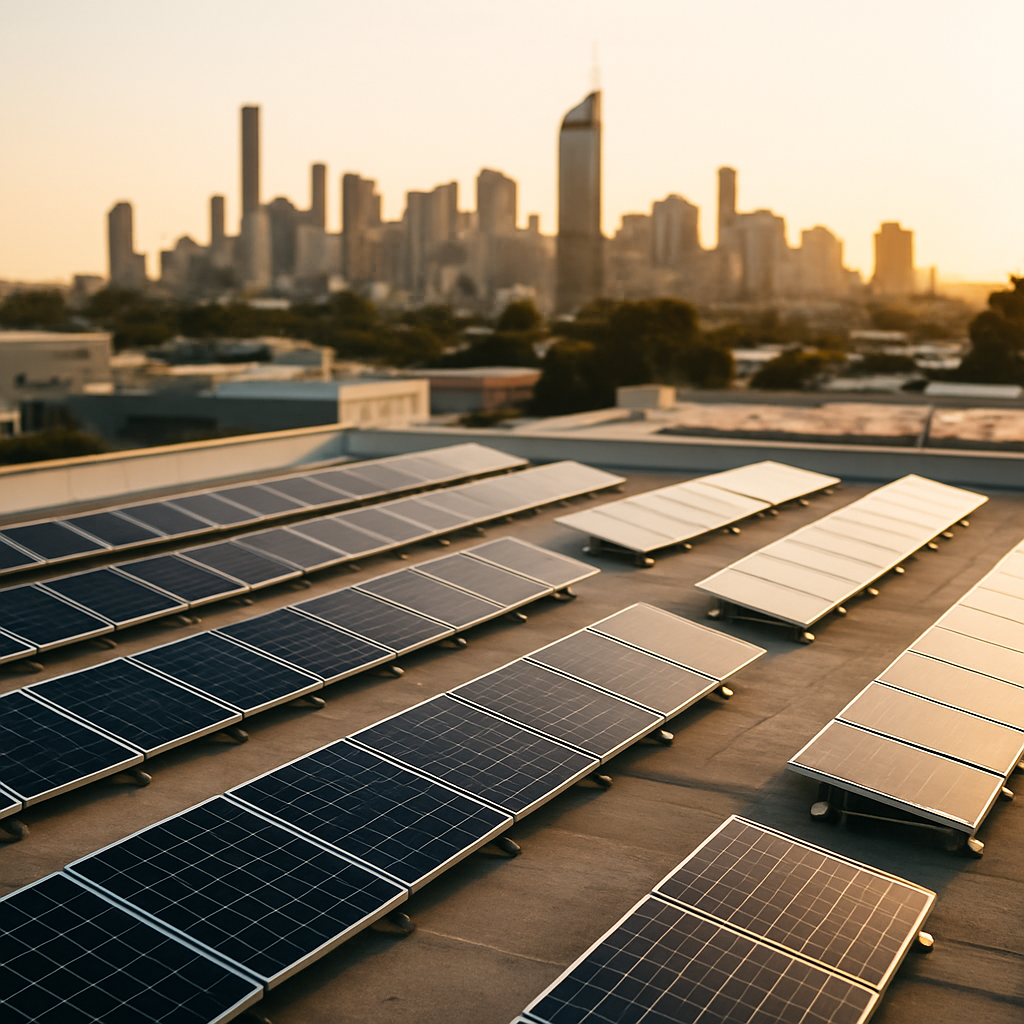
Sizing a solar system for your business isn’t about guesswork; it’s about matching the system’s generation capacity to your operational energy needs. The goal is to maximise self-consumption—using the solar power you generate in real-time—as this delivers a much better financial return than exporting it to the grid. A system that’s too small leaves savings on the table, while an oversized system can extend your payback period unnecessarily, especially as feed-in tariffs for businesses are often less generous than residential ones.
A commercial solar system’s size is measured in kilowatts (kW), which represents the total power output capacity of the panels. For example, a 30kW system might consist of around 65-70 individual solar panels. To determine the right size, we first need to understand your electricity usage profile.
How to calculate business electricity consumption for solar sizing Brisbane
The most critical step in sizing your solar system is a thorough analysis of your electricity bills and usage patterns. This isn’t just about the total amount you use, but when you use it.
Start by gathering at least 12 months of your business’s electricity bills. This historical data helps account for seasonal variations, such as higher air conditioning use in summer.
On your bill, find your ‘average daily use’ in kilowatt-hours (kWh). This figure is your starting point. For a more precise calculation, follow these steps:
-
Identify Daytime Usage: Look for interval data if your bill provides it, or use a monitoring device to track your consumption patterns. Solar panels only produce power during the day, so you need to know how much electricity your business consumes between sunrise and sunset. This is the energy you can directly offset.
-
Calculate Your Target System Size: A simplified formula can provide a good estimate. In Brisbane, a solar system generates roughly 4.5 kWh of energy per kW of capacity per day on average throughout the year. To find a starting system size, divide your average daily daytime kWh consumption by 4.5.
-
Consider Future Growth: Are you planning to expand operations, install new machinery, or add electric vehicles to your fleet? Factor these future energy needs into your calculations to avoid undersizing your system.
A professional installer will perform a detailed energy audit and load profile analysis to recommend the most financially viable system size for your specific operations.
Optimal solar panel orientation and tilt angle Brisbane

To get the most out of your solar investment in sunny Brisbane, panel placement is key. While modern panels are highly efficient, adhering to optimal orientation and tilt angles will maximise your system’s output.
-
Optimal Orientation: In the Southern Hemisphere, the ideal orientation for solar panels is true north. This positioning ensures the panels receive the most direct sunlight throughout the day.
-
Optimal Tilt Angle: A University of Queensland study found the ideal tilt angle for solar panels in Brisbane is 26 degrees. This closely matches the city’s latitude (27.5 degrees), allowing the panels to capture sunlight at the most effective angle.
What if your roof isn’t perfectly north-facing? Don’t worry. East or west-facing installations are still highly effective, typically generating about 85% of the power of a north-facing array. An east-facing system can be beneficial for businesses that have high energy demands in the morning, while a west-facing system suits those with peak usage in the afternoon.
Case Study: A Brisbane Manufacturing Business A small manufacturing business in Rocklea was struggling with quarterly electricity bills over $4,000 due to machinery running all day. They installed a 30kW solar system with Trina panels for approximately $28,000 after the STC incentive. Their system now covers over 80% of their daytime electricity consumption, saving them more than $5,500 annually. This puts them on track for a payback period of just over 5 years, turning a major operational cost into a long-term asset.
Commercial solar system prices Brisbane 10kW 30kW 50kW 100kW
The cost of a commercial solar system in Brisbane has become increasingly competitive, offering compelling returns on investment. Prices vary based on the quality of components (panels and inverters), installation complexity, and the installer’s credentials.
Here is a guide to the expected starting prices for common commercial system sizes in Brisbane. These prices are indicative and reflect the upfront cost after the federal Small-scale Technology Certificate (STC) rebate has been applied.
| System Size | Indicative Starting Price (After STC Rebate) | Best Suited For |
|---|---|---|
| 10kW | From $9,000 | Small offices, cafes, retail shops with moderate daytime use. |
| 30kW | From $25,000 | Medium-sized businesses, light manufacturing, larger offices. |
| 50kW | From $40,000 | Larger commercial operations, warehouses, small factories. |
| 100kW | From $85,000 | Large-scale manufacturing, cold storage, multi-site businesses. |
Gigi’s Pro Tip: Systems up to 100kW are eligible for the STC program, which provides a significant upfront discount. For systems larger than 100kW, a different incentive scheme called the Large-scale Generation Certificate (LGC) program applies, which functions differently. A good installer will explain this threshold clearly.
How to choose a commercial solar installer in Brisbane
Selecting the right installer is the most important decision you’ll make in your solar journey. A quality installation ensures safety, performance, and longevity.
Here are the key things to look for:
-
Solar Accreditation Australia (SAA) Accreditation: This is non-negotiable. To be eligible for the STC government rebate, your system must be installed by an SAA-accredited professional. Do not proceed with any installer who cannot provide their SAA accreditation details.
-
New Energy Tech Consumer Code (NETCC) Approved Seller: While SAA accreditation applies to the installer, the NETCC is a code of conduct for retailers. Choosing a NETCC Approved Seller provides an extra layer of consumer protection, as they have committed to higher standards of service and integrity.
-
Experience and Reputation: How long has the company been in business? Can they provide case studies and references from other local businesses? Check online reviews on independent platforms.
-
In-house Team vs. Subcontractors: Ask if they use their own team of installers or if they subcontract the work. An in-house team often means better quality control and clearer lines of responsibility.
-
Comprehensive Quoting: A detailed quote should break down all costs, list the specific brands and models of panels and inverters, and provide a clear performance estimate and warranty information.
I know this process can feel overwhelming. If you need help finding a vetted and trusted solar professional in Brisbane, I can connect you with a local expert. Just fill out the form below for a no-obligation chat.
Taking the time to properly size your system and choose a quality installer will ensure your business reaps the financial and environmental benefits of solar power for decades to come.