
Fast Read
Yes, installing solar panels on a flat roof in Brisbane is a common and effective solution. It involves using specialised mounting systems, like tilt racks or ballasted frames, to angle the panels for optimal sun exposure, typically around 25-27 degrees. A standard 6.6kW system on a flat roof in Brisbane can cost between $5,500 and $9,500 after the federal STC rebate, which is slightly higher than a pitched roof installation due to the extra mounting hardware. Key considerations include ensuring the mounting system meets Queensland's wind load requirements (AS/NZS 1170.2) and that the installer is accredited by Solar Accreditation Australia (SAA). With the right setup, a flat roof solar system can significantly reduce your power bills.
Solar panel installation on a flat roof in Brisbane
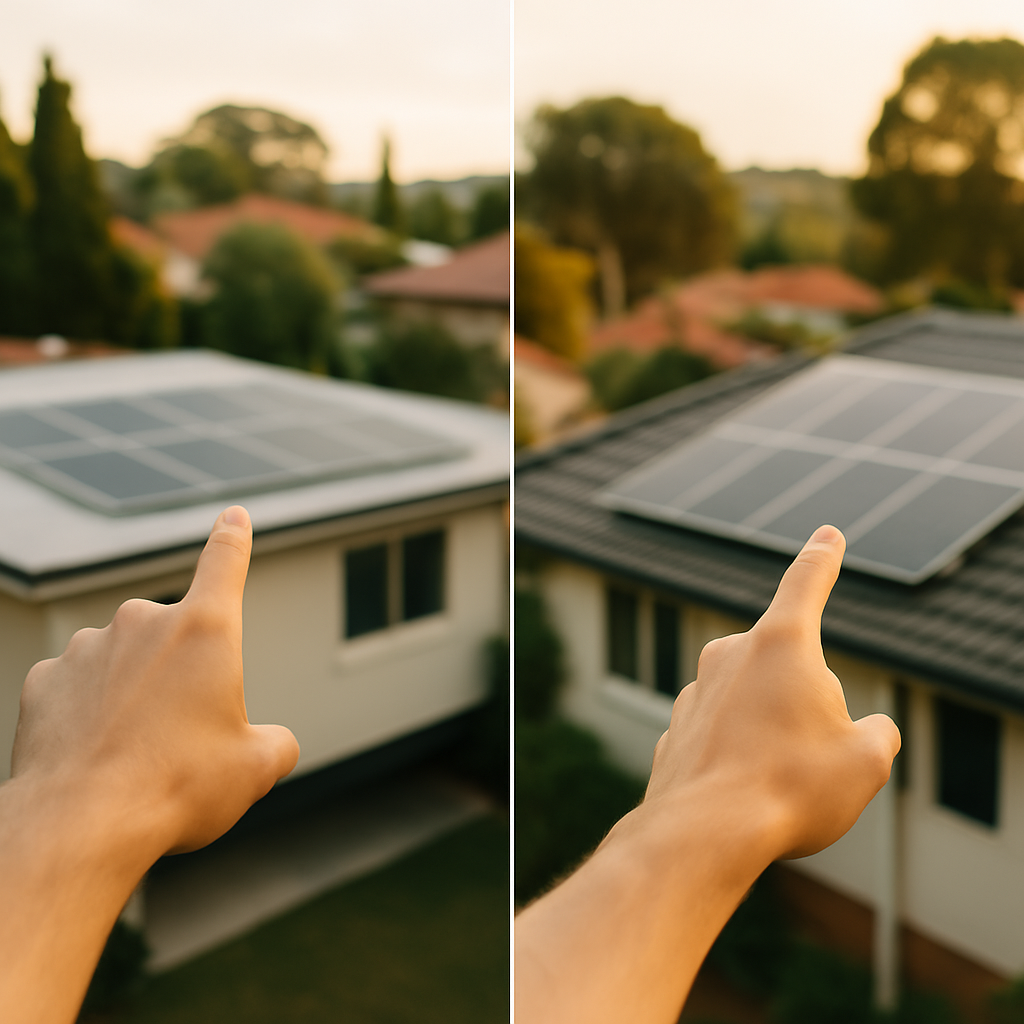
Installing solar panels on a house with a flat roof is a well-established practice in Brisbane. Unlike a standard pitched roof where panels are fixed parallel to the roofline, a flat roof installation gives you complete control over the tilt and orientation of your panels.
This is a significant advantage. For optimal performance in Brisbane, solar panels should ideally face north at a tilt angle of around 25 to 27 degrees. A professional installer can use a specialised mounting system to achieve this perfect angle, ensuring your home solar panels capture the maximum amount of sunlight and produce the most electricity.
There are two main approaches an SAA-accredited installer will take:
-
Tilted Mounting Frames: These are the most common solution. Lightweight, sturdy aluminium frames are attached to the roof to tilt the panels to the ideal angle.
-
Laying Panels Flat: In some cases, panels can be laid flat. This is less common as it reduces energy output by about 20% and prevents the panels from self-cleaning effectively in the rain, which is crucial in Brisbane’s sometimes dusty environment. However, it can allow for more panels to be installed on a smaller roof.
Flat roof solar panel mounting systems in Australia
When it comes to the hardware, you have a couple of excellent options for your flat roof solar installation in Australia. The choice depends on your roof’s structure and your preference for drilling into the roof surface.
-
Penetrating Tilt Racks: This is the most secure method. The racks are physically bolted through the roof membrane and into the structural joists. While this sounds alarming, when done by a qualified professional, it’s completely safe. They use specialised flashing and industrial-grade sealants to ensure a waterproof seal that lasts for decades. This method is often required to meet Queensland’s strict wind load standards.
-
Ballasted Mounting Systems: If you’re hesitant about drilling holes in your roof, a ballasted system is a great alternative. These systems use weights, typically concrete blocks, to hold the mounting frame and solar panels securely in place without any roof penetrations. An engineer must calculate the precise amount of weight needed to counteract wind uplift forces, ensuring the system is safe and compliant.
| Mounting System | Pros | Cons | Best For |
|---|---|---|---|
| Penetrating Racks | Highly secure, meets highest wind load ratings. | Requires drilling into the roof structure. | Homes in high-wind zones or for homeowners seeking maximum stability. |
| Ballasted Systems | No roof penetrations, preserves roof integrity. | Adds significant weight to the roof; requires structural assessment. | Roofs where penetrations are not desirable or possible. |
Brisbane City Council building regulations for rooftop solar installations
In Brisbane, the good news is that most standard residential rooftop solar installations are considered “self-assessable” and don’t require a specific building permit from the Brisbane City Council. This simplifies the process considerably.
However, this is based on the assumption that the installation complies with all relevant Australian Standards, including:
-
AS/NZS 5033: Installation and safety requirements for PV arrays.
-
AS/NZS 1170.2: Wind Actions (a critical standard for ensuring your panels stay on your roof during a storm).
While you may not need a council permit, your installer must be a licensed electrician with accreditation from Solar Accreditation Australia (SAA) and must submit the necessary paperwork to your electricity distributor, like Energex, to get your system connected to the grid.
Gigi’s Pro Tip: Always ask your installer to provide a “Form 15” as part of their documentation. This is a certificate from a registered professional engineer in Queensland, confirming that the mounting system design is structurally sound and complies with all relevant building codes, including wind loading.
Cost of flat roof solar panel installation vs pitched roof Brisbane

A flat roof solar panel installation in Brisbane generally costs slightly more than one on a standard pitched roof. The difference typically comes down to the additional materials and labour required for the mounting system.
-
Standard Pitched Roof (6.6kW system): $4,800 – $8,500
-
Flat Roof (6.6kW system): $5,500 – $9,500
The price increase of around $500 to $1,000 for a flat roof covers the cost of the tilt frames or ballasted system and the extra time it takes for installers to assemble them and perfectly align the panels. While it’s a higher upfront cost, the performance gains from achieving the optimal tilt angle often deliver a better long-term return on investment.
Case Study: A Family in Paddington The Nguyen family had a flat-roofed home and were receiving quarterly power bills over $550. They installed a 6.6kW system using REC panels and tilt frames for a total cost of $8,200 after the federal STC rebate was applied. Their SAA-accredited installer angled the panels perfectly north, and their annual savings are now close to $2,000. They are on track for a payback period of just over 4 years, and their last electricity bill was in credit.
Common issues with flat roof solar panels in subtropical climates
Brisbane’s subtropical climate of sun, heat, and intense rain presents a few specific challenges for flat roof solar systems.
-
Water Pooling: Flat roofs can be prone to water pooling. A quality solar installation should never impede drainage. Installers must position mounting feet and cabling to ensure water can flow freely to the drains, preventing leaks and structural damage.
-
Debris Build-up: Leaves and dirt can accumulate at the base of tilted panels. A minimum tilt of 10 degrees is recommended to allow rain to wash the panels clean. Without this, efficiency drops, and you’ll need to budget for more frequent manual cleaning.
-
Wind Uplift: Tilted panels can act like a sail in high winds. This makes professional engineering and installation absolutely critical. The mounting system must be designed to withstand Queensland’s powerful storm seasons, adhering strictly to the AS/NZS 1170.2 wind load standard.
Wind load requirements for solar panels on flat roofs in Queensland
Queensland, and particularly the Brisbane area, is classified under specific wind regions according to Australian Standard AS/NZS 1170.2. Your solar installation must be able to withstand the powerful uplift forces that can occur during cyclones and severe thunderstorms.
A reputable installer will:
-
Use mounting systems from trusted manufacturers (like Clenergy or Grace Solar) that are certified for use in your specific wind region.
-
Ensure the engineering of the system—including the number of attachments to the roof and the spacing of the rails—is calculated to meet or exceed these standards.
-
Provide you with the warranty and compliance documentation for the mounting hardware, proving it’s fit for purpose in Queensland conditions.
I can’t stress this enough: cutting corners on mounting hardware is a recipe for disaster. A properly engineered system provides peace of mind that your investment is secure.
Best solar installers for flat roofs Brisbane reviews
Finding an installer with specific experience in flat roof solar is key to a successful outcome. When reading reviews and getting quotes, I recommend focusing on companies that highlight their expertise in this area.
Look for installers who:
-
Are fully accredited with Solar Accreditation Australia (SAA).
-
Have a strong portfolio of completed flat roof projects in the Brisbane area.
-
Are highly rated on independent review platforms.
-
Provide a detailed, itemised quote that specifies the type of mounting system they plan to use.
Making the decision to install solar panels for your home is a big one, and it’s even more so with the specific considerations of a flat roof. But with the right planning and a qualified team, a flat roof can be the perfect platform for a high-performing, bill-slashing solar power system.
If you feel overwhelmed and want to ensure you’re getting a safe, compliant, and cost-effective system, I can help. I can connect you with a trusted local expert who specialises in flat roof solar panels in Brisbane—just fill out the form below for a no-obligation quote.