
Fast Read
Yes, your Brisbane home solar system can absolutely be made cyclone-ready, but it's not standard practice and requires specific attention to detail. True readiness isn’t about buying a special "cyclone-proof" panel; it's about ensuring the entire installation—from the mounting hardware to the way it's fixed to your roof—is engineered to withstand the specific wind speeds for our region, as defined by Australian Standards. For Brisbane, this means adhering to the rules for Wind Region B2, which demands a more robust installation than in many other parts of Australia.
Hello neighbour, Gigi here. Living in beautiful Brisbane means we get to enjoy stunning weather for most of the year. But we also know that our sunshine state can dish out some serious storms, and the thought of a cyclone isn’t ever too far from our minds.
So, when you’re thinking about putting solar panels on your roof, it’s only natural to ask: what happens when a cyclone hits? Will my investment be peeled off the roof and end up in the neighbour’s pool? It’s a great question, and I’m here to help you understand what “cyclone-ready” really means for a home with solar panels.
First, let's talk about Brisbane's actual cyclone risk
While we’re not in the same high-risk category as Far North Queensland, Brisbane has a history of being impacted by cyclones and ex-cyclones. Systems like Cyclone Wanda in 1974, which famously caused the Brisbane flood, and more recent storm events show that we can experience cyclonic-force winds.
Historically, cyclones have made landfall as far south as Brisbane and even into New South Wales. While their frequency in our direct vicinity has varied over the decades, the risk of severe wind events remains. This is why building standards in our region are stricter than in places like Melbourne or Sydney.
What does 'cyclone-rated' for solar panels actually mean?
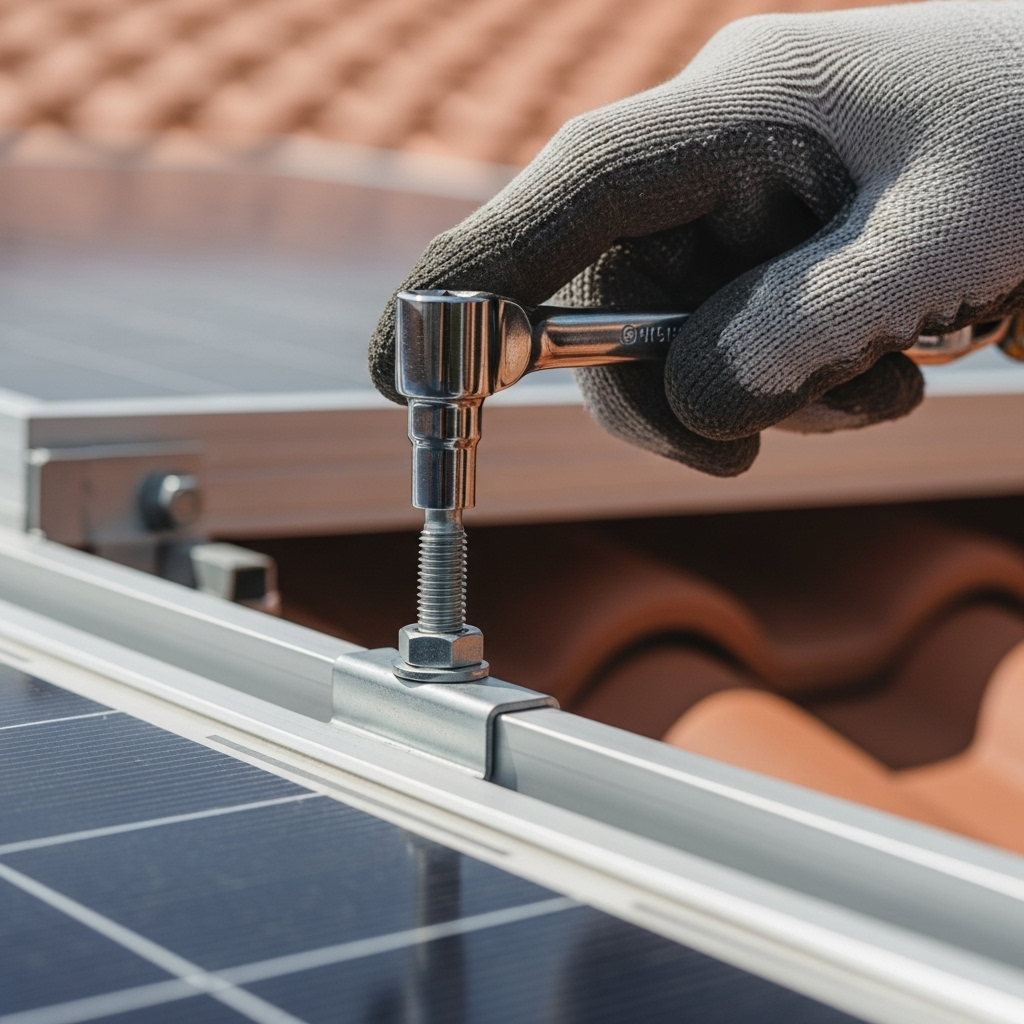
This is where most of the confusion lies. A “cyclone rating” doesn’t really apply to a solar panel itself, but to the entire system and how it’s installed. The panels themselves are incredibly tough—often rated to withstand significant pressure—but they are only as strong as the mounting system holding them down.
True cyclone readiness comes from following the key Australian Standard for wind loads: AS/NZS 1170.2. This is the rulebook engineers and installers use to calculate the wind forces a structure, including your solar array, must be able to resist. It divides Australia into different wind regions, each with its own set of rules.
So, how is Brisbane officially classified for wind?
Under the latest version of the standard (AS/NZS 1170.2:2021), the Brisbane area is classified as Wind Region B2. This classification is a step up from the less risky Region A, which covers most of inland and southern Australia, reflecting our coastal proximity and higher potential wind speeds.
Installations in Region B2 require specific engineering considerations to handle higher wind loads than a standard installation in a lower-rated zone. An installer can’t just use a one-size-fits-all approach.
The rulebooks: Standards your installer must follow
To ensure a safe and secure installation, your installer needs to navigate a few layers of rules and regulations. It sounds complicated, but a good professional will handle this seamlessly.
AS/NZS 1170.2 (The Wind Code): As we’ve covered, this is the big one. It dictates how to calculate wind loads based on your home’s location, height, roof shape, and surrounding terrain.
National Construction Code (NCC): This is the overarching code for all building work in Australia. It calls up specific standards like AS/NZS 1170.2, making them legally enforceable. The NCC also has specific provisions acknowledging the load that solar panels place on a roof.
Queensland Building and Construction Commission (QBCC): The QBCC is our state’s building watchdog. They enforce compliance and have specific guidance on ensuring building elements, including solar installations, are fit for our weather conditions. They make it clear that all components must meet Australian Standards.
Brisbane City Council (BCC): For most standard residential rooftop solar installations, you generally don’t need a specific building permit from the council, as it’s considered “self-assessable building work”. However, this is on the condition that the work fully complies with all the other codes and standards. Your installer should handle all necessary checks and certifications.
The practical stuff: Fixings, footings, and finding the right installer
So what does a Brisbane home solar cyclone ready installation actually look like on your roof? It comes down to the nuts and bolts—literally.
More frequent fixing points: The rails that your panels sit on will be attached to your roof trusses or rafters at more frequent intervals.
Stronger mounting hardware: The clamps, brackets, and rails themselves will be engineered and certified for the higher wind loads of Region B2.
Correct placement: The standard prohibits placing panels too close to the edge of the roof, where wind uplift forces are strongest. Your installer will need to calculate these exclusion zones correctly.
Gigi’s pro tip: Ask your installer specifically how they are complying with AS/NZS 1170.2 for Brisbane’s Wind Region B2. They should be able to explain their mounting plan and why it’s appropriate for your home.
This brings me to the single most important factor: your installer. It is vital to use a qualified and experienced professional. I strongly recommend choosing an installer accredited by Solar Accreditation Australia (SAA). SAA is the new, modern standard for accreditation, and their professionals are trained to understand and apply these complex codes correctly.
Let's talk cost: What's the price for peace of mind?
A cyclone-ready solar installation in Brisbane will cost more than a standard installation in a lower wind zone. There’s no getting around it, and you should be wary of any quote that seems too good to be true.
Upgraded hardware: Cyclone-rated mounting systems are more robust and therefore more expensive.
Additional materials: More fixing points mean more brackets, bolts, and hardware.
Increased labour: A compliant installation takes more time and care to complete.
While it’s hard to put an exact figure on it, you might expect to pay a premium of 10-20% compared to a basic installation. However, this is not an area to cut corners. That small extra investment is buying you the security that your system will be safe, durable, and won’t void your home insurance policy in the event of a storm.
My final thoughts
Getting a Brisbane home solar cyclone ready system isn’t just possible—it’s essential. It’s not about finding a magic “cyclone-proof” panel, but about ensuring your system is designed and installed with engineering rigour by a professional who understands our local conditions and Australian Standards.
By choosing a trusted, SAA-accredited installer who takes the time to do the job right, you can be confident that your investment in clean energy will be secure on your roof for many years to come, whatever the weather throws at us.
If you’re ready to get a proper quote from a vetted local expert, I can introduce you to a trusted, SAA-accredited local professional—just fill out the form below. They can provide a detailed proposal that outlines exactly how they’ll make your solar installation safe and cyclone-ready.
