
Fast Read
Choosing the right off-grid battery system for Darwin’s wet season means prioritising resilience against heat, humidity, and consecutive cloudy days. Expect to need a robust Lithium Iron Phosphate (LiFePO4) battery system with an IP rating of at least IP65 for outdoor durability. Sizing is crucial; a typical Darwin household using around 23 kWh daily should budget for a battery bank of 70-115 kWh to ensure 3-5 days of autonomy. Leading brands for these conditions include PowerPlus Energy, BYD, and Sungrow. While the NT’s Home and Business Battery Scheme has ended, a new Federal rebate starting July 2025 can significantly reduce costs on eligible systems. A complete off-grid solar power system with battery storage can range from $20,000 to $40,000+, depending on size and components.
Best off-grid battery systems for the Darwin wet season
Living off-grid in Darwin presents a unique set of challenges, especially during the wet season. The combination of intense humidity, high temperatures, and weeks of overcast skies means your battery system needs to be exceptionally tough and reliable. I’ve analysed the specifications of many systems, and the best off-grid battery systems are those built to withstand these specific environmental pressures.
The key features you should look for are:
-
Superior thermal management: The battery must be able to operate efficiently in consistently high ambient temperatures without degrading quickly.
-
High IP rating: To protect against torrential rain and high humidity, a strong defence against moisture ingress is non-negotiable.
-
Robust chemistry: The battery’s internal chemistry should be stable at high temperatures and capable of deep cycling to carry you through multiple sunless days.
From my research, here are the top considerations for Darwin’s climate:
| Feature | Recommendation | Why it Matters in Darwin |
|---|---|---|
| Battery Chemistry | Lithium Iron Phosphate (LiFePO4) | Superior heat tolerance, longer lifespan, and safer than other lithium chemistries. A must for the Top End. |
| Ingress Protection (IP) Rating | Minimum IP65 | Ensures the enclosure is dust-tight and can withstand jets of water, protecting electronics from rain and humidity. |
| Recommended Brands | PowerPlus Energy, BYD, Sungrow, Selectronic (inverters) | These brands have a proven track record in harsh Australian conditions and offer robust off-grid solutions. |
| Days of Autonomy | 3 to 5 days | Critical for surviving extended periods of cloud cover common during the wet season without needing a backup generator. |
Gigi’s Pro Tip: When looking at off-grid systems, don’t just focus on the battery. The inverter-charger is the brain of your system. Brands like Selectronic are legendary in the Australian off-grid community for their reliability and are a smart investment for a system you need to depend on.
Off-grid solar battery sizing for the Darwin wet season

Sizing your battery bank correctly is the single most important step to ensure you have reliable power through the wet season. Undersize it, and you’ll face frustrating blackouts.
The first step is to understand your daily electricity consumption. The average household in the Northern Territory uses around 8,500 kWh per year, which breaks down to about 23.3 kWh per day. This is higher than in other parts of Australia, largely due to the heavy reliance on air conditioning.
With that baseline, the formula is straightforward:
Daily Energy Use (kWh) x Days of Autonomy = Minimum Required Battery Capacity (kWh)
For a typical Darwin home, this looks like:
-
3 Days of Autonomy: 23.3 kWh x 3 = 69.9 kWh
-
5 Days of Autonomy: 23.3 kWh x 5 = 116.5 kWh
Therefore, you should be looking for an off-grid power systems battery bank with a usable capacity between 70 kWh and 115 kWh. This might sound large, but it’s the reality of ensuring the lights stay on during a tropical monsoon.
IP rating for outdoor battery systems in tropical climates
An IP (Ingress Protection) rating is a crucial specification that tells you how well a piece of electrical equipment is sealed against solids (like dust) and liquids (like water). In a tropical climate like Darwin’s, with its driving rain and pervasive humidity, this is a critical safety and longevity feature.
The rating is made up of two numbers:
-
First Digit (Solids): Ranges from 0 (no protection) to 6 (completely dust-tight).
-
Second Digit (Liquids): Ranges from 0 (no protection) to 8 (can be continuously submerged).
For an outdoor battery system in Darwin, you should look for a minimum rating of IP65.
-
The ‘6’ means it’s fully protected against dust ingress.
-
The ‘5’ means it’s protected against low-pressure water jets from any direction, which is sufficient for rain.
Some premium batteries, like the Tesla Powerwall 3, offer an IP67 rating, meaning they can be temporarily submerged in water. While not strictly necessary, a higher rating provides extra peace of mind.
Lithium vs lead-acid batteries for hot, humid climates
For years, lead-acid batteries were the standard for off-grid living due to their low upfront cost. However, in hot and humid climates, they are a poor long-term investment. I spoke with an SAA-accredited installer last week, and they confirmed they almost exclusively install off-grid lithium battery systems in the Top End now.
Here’s a direct comparison:
| Feature | Lithium Iron Phosphate (LiFePO4) | Lead-Acid (AGM or Gel) |
|---|---|---|
| Heat Tolerance | Excellent. Performs well and degrades slower in high temperatures. | Poor. High temperatures dramatically shorten lifespan and reduce performance. |
| Usable Capacity | 80-100% depth of discharge. You can use almost the entire battery. | 50% depth of discharge recommended to preserve lifespan. You need double the capacity for the same output. |
| Lifespan (Cycles) | 6,000+ cycles | 500 – 1,500 cycles |
| Maintenance | None required | Regular checks and, for some types, fluid top-ups are needed. |
| Upfront Cost | Higher | Lower |
While the initial cost of lead-acid is tempting, its short lifespan in the Darwin heat means you’d likely replace the entire bank two or three times before a single lithium set wears out. Lithium (specifically LiFePO4) is the clear winner for performance, safety, and long-term value in this environment.
Top-rated solar battery brands for off-grid systems Australia
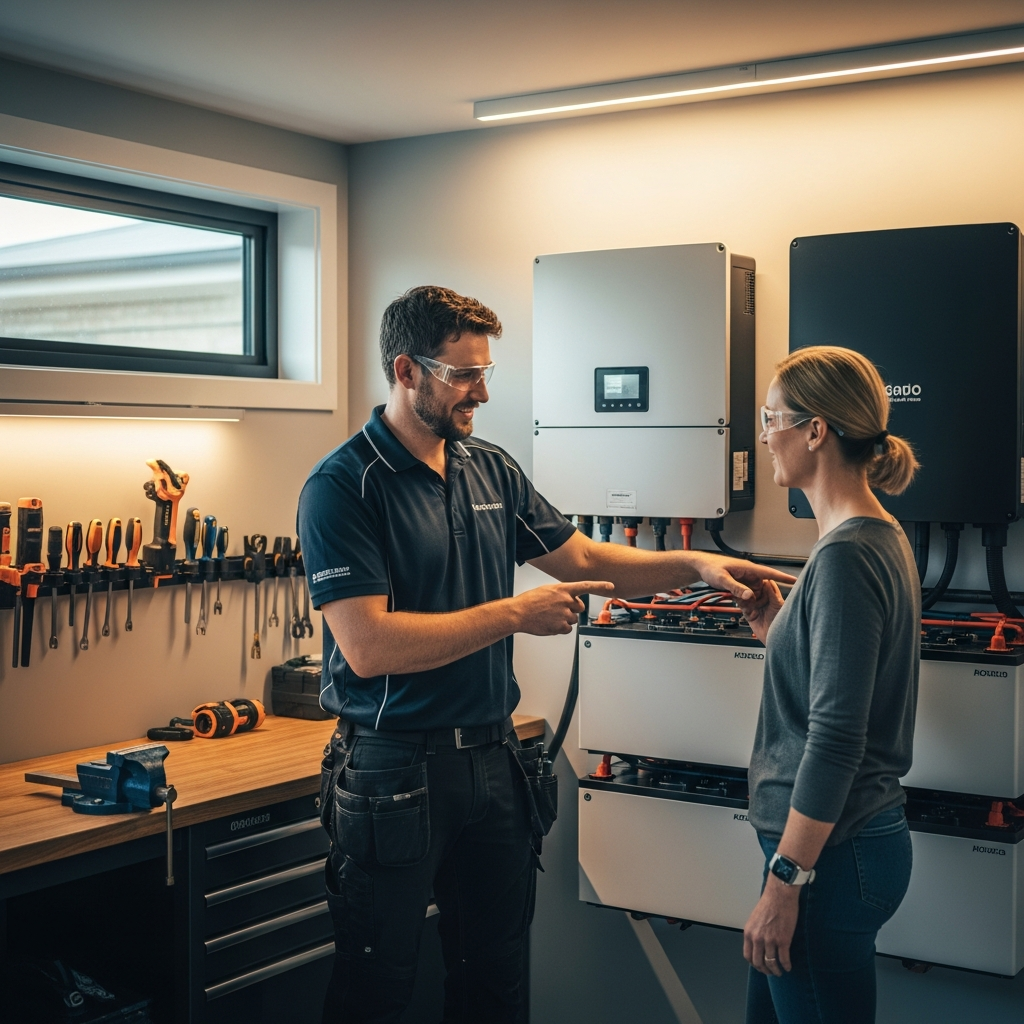
When you’re truly off-grid, you can’t afford to take risks with unproven hardware. You need brands with a solid reputation for reliability in Australian conditions. From my analysis of installer recommendations and product specifications, these are the brands consistently trusted for robust off-grid solar power systems with battery storage:
-
PowerPlus Energy: An Australian company that designs and manufactures batteries specifically for tough conditions. Their modular LiFePO4 systems are highly regarded for off-grid applications.
-
BYD (Build Your Dreams): A global giant in battery manufacturing. Their Battery-Box series is modular, scalable, and known for its safe LiFePO4 chemistry, making it a popular choice for residential off-grid setups.
-
Sungrow: While known for their inverters, Sungrow’s SBR battery series offers a high-voltage, modular LiFePO4 solution that is efficient and well-supported in Australia.
-
Alpha ESS: Often seen as a great value proposition, Alpha ESS provides all-in-one solutions that are popular for both grid-connected and off-grid homes.
Case Study: A Family in Herbert The Jones family was tired of unreliable grid power and high bills, especially from running the air conditioning. They installed a 10kW off-grid solar system using REC panels and a 40kWh PowerPlus Energy battery bank for a total cost of around $35,000. Their system is sized for three days of autonomy, easily carrying them through wet season cloud cover. They now have zero power bills and complete energy independence, with the system on track to pay for itself in under 7 years when factoring in previous power costs and generator fuel savings.
Finding reputable off-grid solar installers in Darwin
The best hardware in the world will fail if installed incorrectly. In Darwin, hiring an installer with proven experience in designing and deploying off-grid systems for the wet season is essential.
Here’s what to look for:
-
SAA Accreditation: Ensure your installer is accredited by Solar Accreditation Australia (SAA). This is the current, leading industry standard for ensuring designers and installers are properly trained and up-to-date.
-
Local Experience: Ask for references from other off-grid customers in the Darwin or surrounding rural areas. A local will understand the unique challenges of the climate and local regulations.
-
Detailed Site Assessment: A reputable installer will perform a thorough assessment of your energy needs, roof space (or ground-mount area), and potential shading before providing a quote.
-
Multiple Quotes: Always get at least three detailed quotes to compare system design, component choice, and cost.
A common mistake I see homeowners make is choosing the cheapest quote without scrutinising the components or the installer’s track record. For an off-grid system that is your sole source of power, quality and reliability must come first.
Northern Territory government rebates for off-grid solar batteries
Navigating rebates can be confusing, but it’s worth the effort. As of late 2025, the situation in the Northern Territory is:
-
NT Home and Business Battery Scheme (HBBS): This generous scheme, which offered up to $12,000, has unfortunately ended after its funding was fully allocated.
-
New Federal Battery Rebate: A new nationwide “Cheaper Home Batteries Program” began on July 1, 2025. This program provides an upfront discount on eligible battery systems, which can significantly reduce the installation cost for Territorians. The system must be installed by an accredited professional.
-
Small-scale Technology Certificates (STCs): This long-standing federal scheme provides a point-of-sale discount on the cost of your solar panels (and now batteries under the new program), effectively lowering the upfront cost. Your installer will handle the paperwork for this.
Always confirm the availability and eligibility criteria of any rebate with your installer, as these programs can change.
Choosing to go off-grid in Darwin is a significant but rewarding investment in your energy independence. By prioritising robust, high-quality components and an experienced local installer, you can build a system that will reliably power your home through the most challenging wet season.
If you’re feeling overwhelmed and want to talk through your options with an expert, I can help. I can connect you with a trusted local installer who specialises in off-grid systems designed for the Top End. Just fill out the form below for a no-obligation chat.
