
Fast Read
A whole home backup power solution in Canberra typically involves a solar battery system, a backup generator, or a complete off-grid installation. A whole home battery backup system, like a 13.5 kWh Tesla Powerwall 3, costs between $14,000 – $17,000 fully installed, while a 10kWh Sungrow SBR system is often priced from $9,000 – $12,000. A backup power generator for a home can range from $2,000 for a smaller unit to over $10,000 for a larger, automatic standby model, plus installation. While the ACT’s original specific battery rebate has ended, residents can access the Sustainable Household Scheme for an interest-free loan of up to $15,000 and the new Federal Battery Rebate from July 2025. Generators and off-grid systems face stricter regulations regarding noise and planning approvals in the ACT.
Types of home power systems available in Canberra
When the power goes out, having a plan to keep your lights on, your fridge running, and your home connected is crucial. In Canberra, there are three primary paths you can take for a reliable power supply: a grid-connected solar battery system, a backup power generator, or a completely off-grid system. Each has its own distinct advantages.
-
Whole Home Solar Battery Backup: This is the clean, quiet, and increasingly popular choice for grid-connected homes. A home battery power backup system stores excess energy generated by your solar panels during the day. When a blackout occurs, a properly configured system can automatically switch over, using that stored solar energy to power your home. This solution is silent, emission-free, and has very low ongoing maintenance costs. Popular and trusted brands in Canberra include Tesla Powerwall, Sungrow, and GoodWe.
-
Whole Home Backup Generator: A backup generator for a house creates electricity by burning fuel, such as petrol, diesel, or LPG. These can be smaller portable units that you manually start when needed, or larger, permanently installed “standby” models that kick in automatically when they detect a grid outage. Generators are often cheaper upfront and can run for extended periods as long as you have fuel. However, they require regular maintenance, have ongoing fuel costs, produce emissions, and can be noisy.
-
Off-Grid Power Systems: For rural properties without a grid connection, or for those seeking complete energy independence, an off-grid system is the ultimate solution. These are standalone power plants for your home, comprising a large solar panel array, a significant battery bank, a powerful inverter, and often a backup generator for emergencies. An off-grid system is designed to meet 100% of your energy needs year-round, but requires significant upfront investment and careful planning to ensure it’s sized correctly for your consumption.
Understanding the cost: Solar battery vs backup generator in Canberra
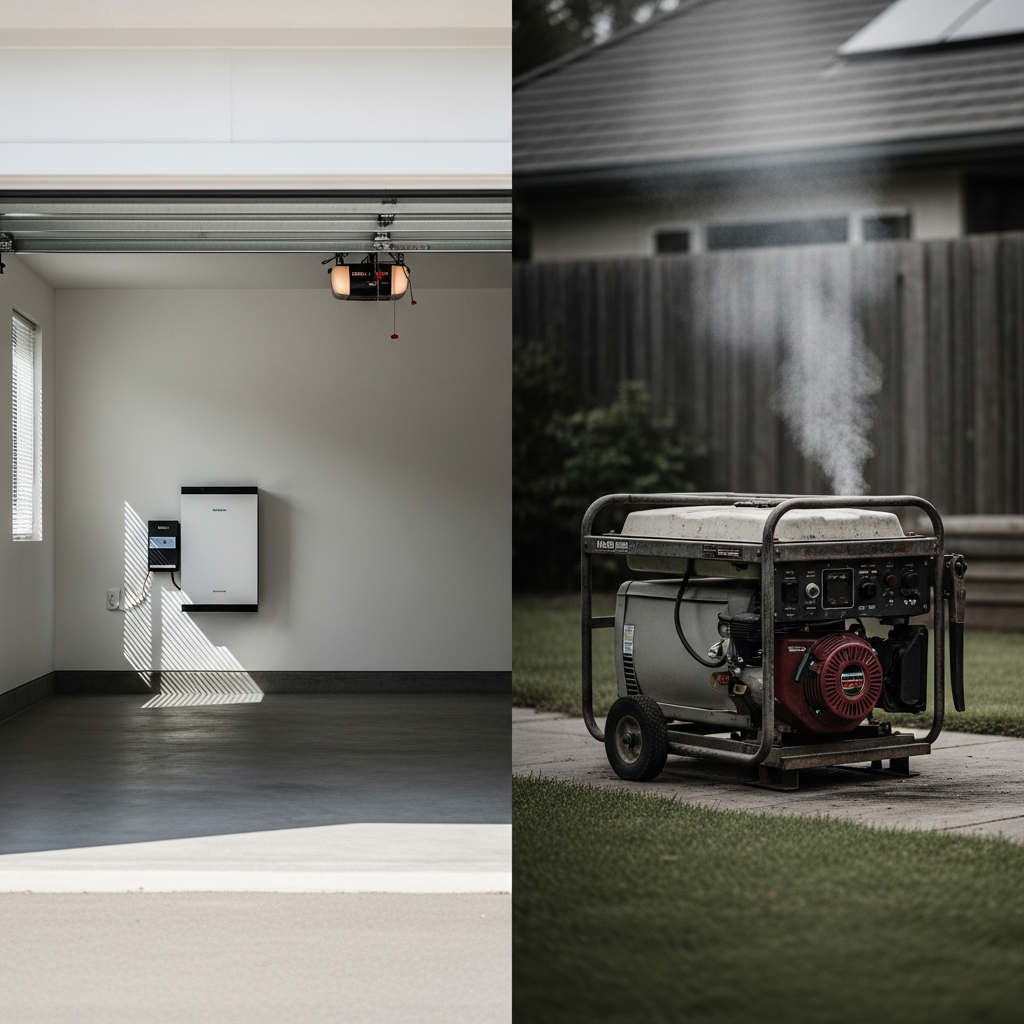
Choosing between a battery and a generator often comes down to a trade-off between upfront investment and long-term running costs. I’ve analysed dozens of quotes and the numbers tell a clear story.
A backup power generator for home use has a lower initial purchase price. A portable unit might cost between $2,000 and $4,000, while a professionally installed standby whole home generator can range from $7,000 to over $15,000 before installation. However, you must factor in ongoing costs for fuel (which fluctuates in price) and regular maintenance like oil and filter changes to ensure it’s ready when you need it.
A whole home battery backup has a higher upfront cost. A system like the popular 10kWh Sungrow SBR can cost between $9,000 and $12,000 installed, while a 13.5kWh Tesla Powerwall 3 typically falls in the $14,000 to $17,000 range. The critical difference is that once installed, its “fuel” is free energy from the sun, and maintenance is minimal. Over its 10-year warranty period, a battery system not only provides backup but also actively saves you money on your daily electricity bills by allowing you to use stored solar power every evening.
Here is a comparison of leading battery options available in Canberra:
| Feature | Tesla Powerwall 3 | Sungrow SBR Series |
|---|---|---|
| Usable Capacity | 13.5 kWh | 9.6 kWh – 25.6 kWh (modular) |
| Key Benefit | Excellent software & seamless backup | Great value & flexible sizing |
| Chemistry | LFP (Lithium Iron Phosphate) | LFP (Lithium Iron Phosphate) |
| Typical Cost | $14,000 – $17,000 | $9,000 – $12,000 (for 10kWh) |
| Backup Function | Integrated and automatic | Requires compatible hybrid inverter |
ACT government incentives for home battery storage
While Canberra’s original “Next Generation Energy Storage” rebate program has concluded, the ACT government continues to provide significant support to homeowners looking to invest in a whole home solar battery backup.
The main incentive available is the Sustainable Household Scheme. This program offers eligible households access to an interest-free loan of between $2,000 and $15,000 to purchase and install energy-efficient products, including household battery storage systems. The loan can be repaid over a period of up to 10 years, making the upfront cost of a battery much more manageable. Note that for some applicants, a low-interest rate may apply, so it’s best to check your eligibility directly.
Additionally, the Federal Government’s Cheaper Home Batteries Program, which started from July 2025, provides an upfront discount on the cost of installing a battery for eligible households. A common mistake I see homeowners make is not checking their eligibility for these combined incentives, which can dramatically improve the financial case for a battery.
Calculating your essential loads for whole home backup power

Before you can choose a system, you need to know what you want to power. A “whole home backup” can mean powering every single appliance, or just the essentials. For most families, covering the essentials is the most cost-effective approach.
Here’s how to calculate your essential load:
-
List your essentials: Walk through your home and list every appliance you can’t live without during an outage. This typically includes the refrigerator, freezer, some lights, your internet modem/router, and chargers for devices. You might also include a microwave or a specific power point for medical equipment.
-
Find the wattage: For each item, find its ‘running’ wattage (the power it needs to operate continuously) and its ‘starting’ or ‘surge’ wattage (the extra power needed to turn on). This is usually on a sticker on the appliance or in its manual.
-
Do the maths:
- Add up the running watts for all essential items you’ll use at the same time.
- Identify the single highest starting watts from your list (usually the fridge or a pump).
- Add the total running watts to that single highest starting watts. This gives you the minimum peak power your system must be able to deliver.
Gigi’s Pro Tip: Always add a 20% buffer to your final calculation. This ensures your system isn’t constantly running at maximum capacity, which extends its life and gives you a little extra power for something you may have forgotten.
Case Study: A Family in Gungahlin The Chen family was tired of losing power during summer storms, with quarterly electricity bills often exceeding $550. They installed an 8kW solar system with Canadian Solar panels and a 10kWh Sungrow battery for a total cost of $16,000. By utilising the ACT Sustainable Household Scheme loan, their upfront cost was minimal. Their system is configured to back up their fridge, lights, and home office. Their annual savings on electricity bills are now over $2,100, putting them on track for a payback period of around 6 years, and their last power outage went completely unnoticed.
Canberra regulations for installing backup power
Installing any power system in Canberra requires adherence to strict local and national standards. This is not a DIY job; it requires licensed and accredited professionals.
For Solar Battery Systems (Grid-Connected):
-
Accreditation: Your installer must be accredited by Solar Accreditation Australia (SAA). This is the new standard, so be wary of anyone still only referencing the outdated CEC accreditation. Companies like SolarHub and Mondiaux Solar are well-regarded SAA-accredited installers in the Canberra region.
-
Network Approval: Before installation, your system designer must get approval from Evoenergy, the electricity distributor in the ACT. This ensures the system connects safely to the grid. Evoenergy maintains a list of approved inverters and has specific technical requirements for how systems must operate, especially in a blackout.
For Backup Generators:
-
Planning and Building Approval: A permanently installed standby generator is considered a development. You will likely need to submit a development application (DA) to the ACT Planning and Land Authority. The physical installation will also require a building approval (BA) to ensure it complies with the National Construction Code.
-
Electrical Standards: All wiring must be completed by a licensed electrician and comply with Australian Standards AS/NZS 3000 (Wiring Rules) and AS/NZS 3010 (Generating sets). This includes the installation of a changeover switch to prevent your generator from sending power back into the grid, which is extremely dangerous for network crews.
-
Noise Regulations: Generators produce noise, which is regulated in the ACT under the Environment Protection Act 1997. Before purchasing a generator, I strongly advise you to consult the ACT Environment Protection Authority (EPA) to understand the specific decibel limits for your property.
For Off-Grid Systems:
-
Development and Building Approvals: Constructing a home designed to be off-grid from the start, or retrofitting a property to be completely off-grid, will require development (DA) and building approvals (BA). Ground-mounted solar arrays, in particular, will need to be assessed by the Environment, Planning and Sustainable Development Directorate.
-
System Design & Compliance: There is no grid to fall back on, so your system must be designed by an experienced off-grid specialist to be safe, reliable, and capable of meeting your needs through the worst winter weather. All electrical work must be performed by a licensed electrician and a Certificate of Electrical Safety (CES) must be submitted to Access Canberra. While you won’t need a connection agreement with Evoenergy, your system must still adhere to all relevant Australian Standards.
Making the right choice for your Canberra home
For most Canberra households connected to the grid, a whole home solar battery backup is the superior long-term investment. It’s silent, clean, requires almost no maintenance, and actively works to lower your power bills every single day, not just during a blackout. With the support of the ACT’s Sustainable Household Scheme and federal rebates, the financial barrier is lower than ever.
A backup power generator may be a suitable option if your primary concern is a lower upfront cost and you need to power very heavy loads for extended, multi-day outages, which are rare in Canberra’s urban areas. However, the trade-offs in noise, fuel costs, maintenance, and environmental impact are significant.
Finally, a full off-grid system is the ideal choice for those on rural properties without easy access to the grid or for anyone committed to complete energy independence. While it requires the largest investment, it offers freedom from electricity retailers and a truly self-sufficient lifestyle.
If you’re ready to explore your options for a secure, resilient home, the next step is to get tailored advice. I can connect you with a trusted local expert who can assess your specific needs and provide a clear, no-obligation quote.
